Web cookies (also called HTTP cookies, browser cookies, or simply cookies) are small pieces of data that websites store on your device (computer, phone, etc.) through your web browser. They are used to remember information about you and your interactions with the site.
Purpose of Cookies:
Session Management:
Keeping you logged in
Remembering items in a shopping cart
Saving language or theme preferences
Personalization:
Tailoring content or ads based on your previous activity
Tracking & Analytics:
Monitoring browsing behavior for analytics or marketing purposes
Types of Cookies:
Session Cookies:
Temporary; deleted when you close your browser
Used for things like keeping you logged in during a single session
Persistent Cookies:
Stored on your device until they expire or are manually deleted
Used for remembering login credentials, settings, etc.
First-Party Cookies:
Set by the website you're visiting directly
Third-Party Cookies:
Set by other domains (usually advertisers) embedded in the website
Commonly used for tracking across multiple sites
Authentication cookies are a special type of web cookie used to identify and verify a user after they log in to a website or web application.
What They Do:
Once you log in to a site, the server creates an authentication cookie and sends it to your browser. This cookie:
Proves to the website that you're logged in
Prevents you from having to log in again on every page you visit
Can persist across sessions if you select "Remember me"
What's Inside an Authentication Cookie?
Typically, it contains:
A unique session ID (not your actual password)
Optional metadata (e.g., expiration time, security flags)
Analytics cookies are cookies used to collect data about how visitors interact with a website. Their primary purpose is to help website owners understand and improve user experience by analyzing things like:
How users navigate the site
Which pages are most/least visited
How long users stay on each page
What device, browser, or location the user is from
What They Track:
Some examples of data analytics cookies may collect:
Page views and time spent on pages
Click paths (how users move from page to page)
Bounce rate (users who leave without interacting)
User demographics (location, language, device)
Referring websites (how users arrived at the site)
Here’s how you can disable cookies in common browsers:
1. Google Chrome
Open Chrome and click the three vertical dots in the top-right corner.
Go to Settings > Privacy and security > Cookies and other site data.
Choose your preferred option:
Block all cookies (not recommended, can break most websites).
Block third-party cookies (can block ads and tracking cookies).
2. Mozilla Firefox
Open Firefox and click the three horizontal lines in the top-right corner.
Go to Settings > Privacy & Security.
Under the Enhanced Tracking Protection section, choose Strict to block most cookies or Custom to manually choose which cookies to block.
3. Safari
Open Safari and click Safari in the top-left corner of the screen.
Go to Preferences > Privacy.
Check Block all cookies to stop all cookies, or select options to block third-party cookies.
4. Microsoft Edge
Open Edge and click the three horizontal dots in the top-right corner.
Go to Settings > Privacy, search, and services > Cookies and site permissions.
Select your cookie settings from there, including blocking all cookies or blocking third-party cookies.
5. On Mobile (iOS/Android)
For Safari on iOS: Go to Settings > Safari > Privacy & Security > Block All Cookies.
For Chrome on Android: Open the app, tap the three dots, go to Settings > Privacy and security > Cookies.
Be Aware:
Disabling cookies can make your online experience more difficult. Some websites may not load properly, or you may be logged out frequently. Also, certain features may not work as expected.
UConn Alum Directs Public Service Announcement on Racial Profiling
A new campaign supported by UConn’s Institute for Municipal and Regional Policy advances statewide outreach on racial profiling while giving alum Matt Johnson ’25 (SFA) his directorial debut.
A new public service announcement for the Connecticut Racial Profiling Prohibition Project is designed to help viewers understand statewide efforts to improve traffic safety and eliminate racial profiling. (Photo courtesy of the UConn Institute for Municipal and Regional Policy)
A new public service announcement from UConn’sInstitute for Municipal and Regional Policy (IMRP)is turning a complex policy issue into a clear message for the public, while also providing a recent alum with his directorial debut.
Behind that brief message was more than six months of production work, as well as a professional milestone for Matt Johnson ’25 (SFA), an Old Saybrook native and graduate who directed the spot.
“It felt like a big stepping stone,” says Johnson. “It was real work, not just a school project, but still connected to UConn.”
“It was exciting to support a recent UConn graduate at the beginning of his professional filmmaking career,” saysKen Barone, project manager for CTRP3 and associate director of IMRP, which is part of UConn’s School of Public Policy in the College of Liberal Arts and Sciences. “I am confident that his work will continue to make a difference as he uses his skills to inspire these thoughtful conversations.”
CTRP3 is a statewide advisory board that oversees implementation of the Alvin W. Penn Racial Profiling Prohibition Act, which prohibits racial profiling by police. Led by Barone, the initiative examines traffic-stop data and works to promote transparency, accountability, and trust between law enforcement and the communities they serve.
While the subject matter is complex, the goal of the public service announcement is straightforward: to communicate clearly, concisely, and in a way that resonates with a broad audience. Viewers are directed to the project’s website, where they canlearn about the lawandhow to file a reportif they believe they have been racially profiled during a traffic stop.
In hiring a visual storyteller for this project, IMRP drew from an internal pipeline.Justin Liberman, assistant professor of digital media and design in the School of Fine Arts, connected the Institute with students from his narrative production class. Among them was Matt Johnson, whom Liberman recognized for both his technical ability and his readiness to take on a larger role.
“I hadn’t heard of the IMRP or CTRP3 before the first call,” says Johnson. “But with video, you get thrown into these projects, and it’s your job to figure out how to communicate them.”
That challenge quickly became part of the appeal.
Johnson had been producing his own content since high school and came to UConn hoping to capitalize on its strong program and local connections. He earned his degree in just three years and was ready to put his skills to work.
The project came at a pivotal moment, just as Johnson was transitioning from student to professional. For the first time, Johnson was managing a full production with a budget, coordinating a team, and navigating the expectations of multiple stakeholders. He also edited and created graphics and scored music for the video.
“It wasn’t just making a video. It was running a production,” Johnson says. “I’d never done a project on this scale with fiscal responsibility. Figuring that out was huge.”
From concept through final editing, the public service announcement was developed through close collaboration between Johnson and IMRP staff, with script input from the project’s advisory board.
That collaboration helped ensure that the message was both accurate and effective, particularly given the complexity of the topic. At the same time, it required translating creative ideas into terms accessible to partners less familiar with video production and securing and maintaining buy-in on the concept.
“It was a huge awakening,” Johnson says of the script meetings. “Understanding how people feel in those traffic-stop situations was something I hadn’t experienced before. I wanted to be sure to represent those experiences thoughtfully and accurately.”
The resulting video captures the power of perspective, says Barone.
“By centering each person’s lived experience, the video reminds us how important it is to listen, understand, and find common ground,” says Barone.
Matt Johnson ’25 (SFA) directs a scene at the UConn Hartford campus. (Photo courtesy of the UConn Institute for Municipal and Regional Policy)
The connections to IMRP and the CTRP3 advisory board helped bring that authenticity to the video. While Johnson hired an actor to portray a driver, a real-life officer from the Madison Police Department played the role of the on-scene officer. Local police also supported the shoot and helped ensure the safety of the crew during the roadway scene.
Filming took place outdoors and at UConn Hartford, where IMRP is housed, as well as the offices of West Hartford Chief of Police Vernon Riddick.
Several UConn contributors appear on-screen, including Barone, IMRP program administrator Erica Escobar, and Anya McGlaughlin, an IMRP research intern and School of Public Policy master’s candidate.
For Johnson, who had often worked independently or with fellow students and classmates, the experience of supervising a six-person crew marked a shift.
“Having a full team, that was huge for me,” says Johnson. “It changes what you’re able to create.”
IMRP has contracted Johnson to create a second CTRP3 outreach video and another featuring the community forums it runs around the state. He will add that to his busy post-graduate schedule.
In addition to running his own media company, Matt Johnson Media, he works part time as a video specialist with Miranda Creative, shooting commercial and social content for a variety of clients.
“I want to be part of projects at this level full time,” he says. “I want to be the one shaping what people see on screen.”
For IMRP, the collaboration reflects an ongoing effort to expand how its work is communicated and who helps tell those stories.
“This project showed what’s possible,” Johnson says. “When you bring together the right people, you can create something that really connects.”
Senior Exhibition and Film Festival Highlight DMD Capstone Projects
The exhibition brings together works from DMD disciplines ranging from animation to interactive design to video production, showcasing the talented Class of 2026
Audiences visit and engage with the DMD senior exhibition projects displayed in Jorgensen Gallery. (Contributed Photo)
For the past year, 59 digital media and design (DMD) seniors were devoted to developing their senior capstone projects. Their efforts culminated in the 8th annual UConn DMD BFA Senior Exhibition and the first ever Film & Animation Festival at UConn.
Hosted in the Jorgensen Gallery, the DMD exhibition featured the web and interactive media design as well as game design work of 28 students, and on April 25, 31 seniors participated in the film and animation festival at the Harriet S. Jorgensen Theatre.
“In the eight years since we started the exhibition, it nearly tripled in size. From 21 students in 2019 to 59 now, is an incredible growth,” says Heather Elliott-Famularo, the department head for digital media and design.
The two-semester senior capstone course allows students to gain professional experience in their field as well as executing skills they’ve spent the past four years developing.
“Taking the time to experience the whole process of game development was essential in expanding my skillset going forward. While I’ve developed projects throughout my time at UConn, this was my first time making something fully complete to publish, so spending time on optimization and being prepared for this to work on other devices was an immense learning experience,” says Ryan DeFillipo ’26 (SFA), whose video game “May Our Paths Cross” was featured in the exhibition.
Ryan DeFillipo with his exhibition, a video game called “May Our Paths Cross.” (Contributed Photo)
The various concentrations within the DMD program offers students the flexibility to create a project they are passionate about, while also providing the opportunity to dive into the different areas of their creation.
“I chose DMD because it offered me mobility, not just forced into one major or the other, like a lot of other Digital Media programs, especially because at the time, I was unsure which medium I wanted to tell stories in,” says Connor Denecour ’26 (SFA), who found his passion for telling stories that have been underrepresented through film, culminating in his capstone film “Running Against the Odds.”
A unique element of this project for the interactive game students is that they are doing all the aspects needed to install their work for the public, a vastly different process than creating work for a one-time critique.
“I spent lots of time solving code, creating artwork and rewriting scripts. I designed every component used in the project, which was an incredible learning experience but also time-consuming,” says DeFillipo, whose game takes experiences from his life to resonate with others. “For over 30 weeks, I spent hours designing and implementing assets, receiving feedback and then applying that to my work. Over that repetitive process, my game took shape.”
Audience members during the film and festival on April 25, 2026. (Contributed Photo)The nature of the DMD program is a close-knit and collaborative community. This support is reflective in the capstone project through student cohorts and faculty mentoring.
“My project advisor, James Coltrain, started working with me back in May of 2025 to ideate, and give early feedback on prototypes, mechanics and artwork. From there, I shared my progress with my friends in the major, who’ve been an amazing support group over the last four years, to receive constructive feedback,” says DeFillipo.
Every student selects one faculty to be a DMD senior project advisor who they meet with throughout the year. This structure is designed in a way to help support the students to get the most kind of feedback and improve their projects during the whole experience, explains Elliott-Famularo.
For Denecour, his classmates even ended up being part of his film crew, helping him tell the story of Ellison “Tarzan” Brown, a Narragansett Indigenous runner who competed during the Great Depression.
Connor Denecour’s poster for his exhibition film, “Running Against the Odds.”
The exhibition and film festival not only celebrated the work of DMD seniors, but also emphasized the creative freedom that the DMD program offers.
“We really encourage students to find a topic they’re passionate about, which shines through in these final projects. Our program is not forcing our students down a certain path, but rather helping them find their creative voice,” says Elliott-Famularo.
For DeFillipo and Denecour, their personal passions and digital skillsets flourished through their capstone project, preparing them for a future in digital creation.
“Going into the gallery during the exhibition showcase to see people playing my game was a dream come true and knowing that they could enjoy what I put my heart into for the last year and change was incredible,” says DeFillipo, who plans on continuing growing his skillset to make more projects, and share them with others.
After sharing his film with an audience, Denecour is looking forward to submitting his work to local film festivals and continuing to share Tarzan’s story.
“Having my work shown was a very touching experience. I am super critical of my work, and when working with the community, I wanted the piece to be the best it could be. When it was playing, I heard people seriously engaging with the film, reacting to the highs and lows of Tarzan’s life. I felt that the film did what it was meant to do: getting Tarzan’s story out there past Rhode Island and Eastern Connecticut,” says Denecour.
A promotional poster for the 2026 DMD BFA Senior Exhibition. The exhibition is on display at the Jorgensen Gallery until April 26. Photo courtesy of @uconndmd on Instagram
Art and multimedia are equally important as they are enticing at the University of Connecticut. If you’re fascinated by intersections between art and media, you’ll be stoked to hear that UConn is currently hosting its 8th annual Digital and Media Design Bachelor of Fine Arts Senior Exhibition.
Beginning on April 10, the collection continues to be shown at the Jorgensen Gallery until April 26.
The UConn DMD BFA Senior Exhibition features projects from 59 Digital Media and Design seniors from the Storrs and Stamford campuses. Twenty-eight of them are presented in the gallery while the remaining 31 will be featured at the Film & Animation Festival on April 25 at the Jorgensen Center for the Performing Arts.
According to Heather Elliott-Famularo, head of the Digital Media and Design department at the Storrs campus, seniors in the program go through a year-long process to compose their work.
“Our DMD BFA seniors create a two-semester capstone project in their area of concentration — resulting in a short film or animation, a fully-playable video game, an interactive website or mobile app, or some kind of hybrid work based on their expertise and focus,” Elliot-Famularo said.
Elliot-Famularo added that the projects are crucial to the students’ academic journeys.
“It is the culmination of four years of dedicated studies, and having the opportunity to publicly display their work is an essential part of their professional development,” she said.
There are four types of work presented in the exhibition: motion design and animation, 3D animation, web or interactive media design, digital film or video production, and game design.
One notable piece from the motion design and animation section is “Imagination in Overdrive” by Quinton Miller. According to the artist’s statement, “Imagination in Overdrive” is an animation where a toy bus travels through a city of blocks. The animation was inspired by Miller’s memories of playing with his little brother as a child.
Miller said he began doing this project in Feb. 2025 and completed it this March. He also said he dedicated over 100 hours to crafting the animation. Along the way, he said he encountered some obstacles.
“I encountered many learning curves with the software, computer bugs and scheduling challenges throughout the process,” Miller said. “But with patience, time management and perseverance, I worked through them.”
There are dozens of other astounding projects featured in the motion design and animation section. Some of those are “Continuum” by Jamaile Hall and “Snooze Support” by Natalie Ciarleglio.
In the game design section, there are many fascinating video games. One is “Knight of Ash” by Samuel Victoria.
According to the artist’s statement, “Knight of Ash” is a symbolization of Victoria’s growth as a game developer. Set in a dark fantastical world, it contains knights and dungeons.
Victoria said they’ve spent over a year designing the game. They also mentioned they worked on the game on and off until their fifth or sixth semester. During that time, they decided to start over from scratch.
“The second version of the project also went through various changes both in its gameplay and its visual aesthetic before becoming what is now my finished senior project build,” Victoria said.
3D animation holds a ton of inspiring work from gifted artists. “Memorias” by Ana Marcano Diaz and “Starlight Circus” by Elaina Tiplady are two of those works. “Contained Conditions” by Mari Klein is another outstanding 3D animation piece.
Experimenting with psychology and horror, “Contained Conditions” presents a teenager’s irrational fears that are personified as grotesque monsters. The goal of the animation is to connect viewers that are debilitated by phobias, Klein said.
Klein stated that her interest in horror came from her father. She also mentioned that science fiction horror films were influential to “Contained Conditions.”
“The subgenre definitely inspired me while I worked on my senior project,” Klein said.
Klein also elaborated on the use of fear in her animation.
“I know being afraid is not the best feeling, but I want viewers of my animation to understand how scary the unknown can be, especially those who have debilitating phobias,” Klein said. “I don’t think ‘Contained Conditions’ would be as impactful if I didn’t watch horror films with my family.”
Some pieces are reflections of the artists’ personal life or memories. Others are based on their goals. An example of the latter is “Honeycomb,” a website designed by Aliyah Ronda.
“Honeycomb” was designed to help consignment shops make smarter buying and data-driven selling decisions, according to the artist’s statement. Ronda crafted this website to address the lack of accessibility to resources that small businesses need to track customer demand, inventory performance and trend shifts.
Ronda also said her website can help small businesses with growth and decisions.
“Honeycomb can transform everyday resale issues into strategic opportunities for growth,” Ronda said. “The platform aims to promote decisions that are better for the customer, the company, the community and the environment.”
Meanwhile, there are designs that focus on historical sites. “Echoes of Baltic Village” by Alex Roth does just that.
“Echoes of Baltic Village” is a digital film that discusses Baltic, a significant Connecticut town that was once home to the western hemisphere’s largest textile mill. The film focuses on the decay of that mill.
Roth stated that his film’s roots of his work are based on his childhood in New England.
“Growing up, I spent a lot of time hiking throughout New England,” Roth said. “Coming across old foundations, stone walls and fences, I wondered what communities and industries once existed there.”
Producing their designs was an extensive journey for the seniors, according to Elliott-Famularo. However, she said it’s also valuable to their academic careers.
“It’s a really special experience and helps prepare them for working collaboratively with others in their future careers,” Elliott-Famularo said.
A preview for Aliyah Ronda’s DMD BFA Senior project. “Honeycomb” was designed to help consignment shops make smarter buying and data-driven selling decisions. Photo courtesy of @uconndmd on Instagram
It also provokes a sense of community within the students.
“The shared senior project experience really brings the students closer together,” Elliott-Famularo said. “They are in class together all year, giving each other feedback on their stories and art styles, helping each other with technical issues, and critiquing regularly as their projects come to final fruition — they’re in it together.’”
Aside from the exhibition, seniors can submit their work to game or web conferences, competitions and film festivals. This was a huge success last year, Elliott-Famularo said.
Elliott-Famularo said she can’t wait to see what happens with this amazing group of seniors, and she wishes them the best of luck in their post-graduate lives.
The exhibition is open Mondays, Wednesdays and Fridays from 10 a.m. to 4 p.m. and Thursdays from 1 p.m. to 4 p.m. It can also be viewed before performances and during intermissions taking place at the Jorgensen Center for the Performing Arts. The exhibition also has its own website where visitors can virtually explore the designs.
Beyond the adrenaline rush, Jesse Gillett ’26 (SFA) says there’s something special that draws him like a magnet to document the fearsome weather phenomena
Storm of Passion CEO and owner Ryan Shepard stands in front of his chase vehicles as the team assesses the skies. (Photo courtesy of Jesse Gillett)
Somewhere in central Kansas, Jesse Gillett looks to the sky and watches as the dark clouds assemble. A storm is on its way.
He’s not afraid when the dark sky turns green and, like in a movie, the heavens above him start to rotate. His first thought is to move toward the storm, camera in hand for documentation, when the funnel cloud drops. Unlike many, he doesn’t think of running, hiding, or shielding.
Gillett ’26 (SFA) is a member ofStorm of Passion, a volunteer group that has restored and keeps in operation the longest-running tornado intercept vehicle in the world, and he’s desperate for the money shot – a recording of a tornado going over the vehicle in which he sits.
“I hate lightning, that’s the one thing I cannot stand,” he says. “It just happens so suddenly, and the thunderclap is so loud. At least I can see the tornado coming at me, and I can prepare for it.”
The last two years, after the spring semester has wrapped in May, thedigital media and designmajor has left Storrs, destined for Tornado Alley.
Jesse Gillett ’26 (SFA) shoots video out of the turret on top of the tornado intercept vehicle, known as a TIV. Gillett is director of media communications for Storm of Passion, a team that chases tornadoes across the Midwest. (Courtesy of Mike Killian)
Gillett has been fascinated by tornadic activity for years now, earning himself a nice living by playing storm chasing video games like Twisted for viewers ofhis popular YouTube channelthat currently stands at about 139,000 followers.
He remembers the date – June 1, 2011 – when it all started for him, looking out the window of his childhood home, an elementary school kid watching, off in the distance, the sky turn dark, then green.
Fourteen years ago on that date, no tornado dropped on Stafford, Connecticut. Monson, Massachusetts, just across the border, wasn’t so lucky, hosting an EF3 tornado that stopped by for dinner.
“I had seen the movie ‘Twister’ before, but June 1, 2011, was a defining moment for me. You see these things out in Oklahoma and Kansas, but not in your backyard,” Gillett says. “I remember looking out the window that day and seeing the updraft of the supercell going up, and you could see the anvil cloud coming off it and spilling out over the sky. Then two days later I went into Monson and saw just complete annihilation, homes completely obliterated. I remember it all very vividly.”
That core memory sticks with the now 23-year-old as he studies documentary-making at UConn and plans his next move after graduation, likely freelance video editing and animation for other storm chasers chronicling their adventures.
Developing a Brand
Gillett says his parents allowed him on the internet as a youngster, keeping him away from inappropriate content but letting him explore the possibilities online. He found YouTube fascinating.
Among the first videos he uploaded were stop-animation shorts with his Legos in the starring role. Then came clips taken with an old camera. In high school, he started a channel bearing his name, added content to it regularly, and, by 15 years old, had branded himself as “that kid interested in weather.”
Before coming to UConn in fall 2022, Gillett sidestepped to CT State Community College Manchester, where he earned an associate’s degree in communication and media production. Later, he took a leap when he cold contacted Ryan Shepard, head of Storm of Passion.
Shepard purchased the tornado intercept vehicle, known as a TIV, in 2019 from fellow storm chaser Sean Casey, who built it in 2008. Gillett, by now plugged into the storm chasing community through social media, had an idea for his own passion project.
He told Shepard he’d like to meet up with him in Kansas during storm season, that he wanted to shoot some video to promote the vehicle’s restoration for both Shepard’s use and Gillett’s professional pursuits.
Their meeting led to an invitation to the National Storm Chaser Summit, an annual gathering of storm chasers to talk shop, meet fans, and gear up for the coming attraction. Gillett successfully pitched the idea of him joining the team as media communications director, brand builder extraordinaire.
James Breitenbach, Storm of Passion president, and his son Evan, the group’s crew chief, discuss the storm seen on radar inside the tornado intercept vehicle. (Courtesy of Jesse Gillett)
He also sold the idea of an eponymous documentary,“Storm of Passion,”about the Breitenbach family: father James and sons Evan and Angelo, the team’s president, crew chief, and support vehicle navigator, respectively.
The result is an hour-long filmthat earned Gillett the 2025 Audience Choice Award from the Bare Bones Film Festival and the Storm of Passion team national exposure beyond their niche community of family and friends.
At an event for the movie “Twister” in Wakita, Oklahoma, this year, Gillett says, fans, bona fide followers and admirers, asked to have their pictures taken with team members – by name.
“They brought me on to do this brand remediation, to rebuild this from the ground up and to see the success of that is one of the most rewarding things,” Gillett says. “There was a line of people who wanted to get signatures from the crew, when only three years prior there was nobody.”
Drawn to the Midwest
Beyond the adrenaline rush, beyond the desire to face one of the most spectacular weather events there can be, Gillett says there’s something special that draws him like a magnet to the Midwest.
First, there’s Shepard: a quarter of a million dollars in debt from aeronautical school student loans and the cost of building a business with expensive equipment, yet still excited in the face of danger and eager to carry on a legacy, Gillett says, noting his BFA senior project is a 20-minute film about Shepard.
Then, there’s the vehicle, all 14,000 pounds of it.
The Storm of Passion TIVhas had multiple lives, from 2008 to 2019 when Casey was at the helm and from 2019 until now under Shepard’s care, and multiple iterations as the main character on shows like National Geographic’s “Tornado Intercept” and the Discovery Channel’s “Storm Chasers.”
Gillett says it’s faced a tornado producing winds of at least 175 mph – “at least” that high because the anemometer was destroyed after logging that wind speed. It’s the highest wind speed a vehicle of its type has ever survived, making the three occupants inside by default the only ones who’ve ever seen such a sight firsthand.
At 7 tons, the TIV is made of several layers of steel, aluminum, and Kevlar, Gillett says. Steel crossbeams prevent objects from breaking into the cabin, and the windshield is bullet-resistant polycarbonate. Its engine is a stock 2007 Dodge Ram 3500, modified to 625 horsepower, and its fuel tank holds 92 gallons.
A 2×4 can slam into it at 120 mph and barely make a dent, he says.
“Remember the show ‘Mythbusters?’ They pit the TIV against a car behind a Boeing 747 and tested them at wind speeds up to 250 mph over the front of the vehicles. Let’s just say the car was airborne. The TIV, it just didn’t move,” Gillett says. “Having seen that, I feel a little more confident when I get inside.”
Seeing the Tornado, Then the Devastation
In 2024, Gillett rode inside the support vehicle Doghouse, which trails behind the TIV until the latter veers off to intercept a tornado. Doghouse stays nearby, just out of harm’s way but not so far from danger. From it, Gillett watched as one of the strongest tornadoes ever recorded tore through community after community around Greenfield, Iowa.
“You see the tornado touch down and these tentacles of subvortices, which are these little tornadoes inside the main tornado,” he describes. “Then, going up to this town that was just obliterated, it reminded me of June 1, 2011. We see the tornado, but we also see the devastation left behind. That’s sort of changing my perspective slightly.”
Jesse Gillett ’26 (SFA) stands on the side of the road, filming a tornado in Greenfield, Iowa, on May 21, 2024. (Courtesy of Evan Breitenbach)This year, Gillett sat in the back seat, passenger side of the TIV, eager to mount his camera inside its turret. He estimates he’s chased as many as 40 storms and 20 tornadoes over two years, includingthe May 18 wedge tornado that devastated a portion of Plevna, Kansas, in the middle of the night.
“I was looking out the turret,” he says, “and I could only see the left edge, which is this sharp divide that comes down and meets the ground. I couldn’t see the right edge. Later when I went through the video, I figured out that the right edge was just off the screen. Since it was about a mile and a half away from us, if it’s that big, it means the tornado was over a mile wide.”
Yes, Gillett is in pursuit of the money shot, but he also recognizes the importance of his work as a filmmaker, a documentarian of history, someone who at any moment could have camera rolling on something science has never seen before, something nature has never produced.
Immortalizing that is important, he says.
But he has no plans of being an outlier on his own. He knows the TIV could save his life, and chasing as a single-person team carries too much risk, simultaneously navigating the terrain, studying the clouds, watching doppler, driving at highway speeds, filming.
Gillett says over Memorial Day weekend this year, Storm of Passion was just one group in what seemed like a conga line of chasers, a potentially dangerous situation if only because too many vehicles on a single road inevitably produces a traffic jam.
“We’re sitting on the side of the road, and I’m watching this wall cloud start to wrap up and rotate, and I’m thinking, ‘If this tornado drops and surges south, it’s going to cross this road and hit all these people,’” he says. “There was a van in front of us with a bunch of students standing around outside, and if the tornado dropped, they would have had 30 seconds to get in the van and leave.”
The aftermath of a tornado can be devastating. A storm in Greenfield, Iowa, on May 21, 2024, left a wake of destruction. (Courtesy of Ryan Shepard)
His experiences have taught him about tornado dynamics – if the tornado’s left-to-right motion is pushing it to the right, it’s not likely to deviate course to the left, he says, doing so requires too much energy, although it has happened.
His YouTube channel has taught him about branding, self-promotion, and analytics – he earns a percentage of the ad revenue based on how many people watch and how many stay to a video’s end. Some months are better than others, he concedes.
His time at UConn has given him a foundation.
“I went into this embarrassingly not knowing a lot about shooting cinematography. I had done everything on the computer or sort of away from the camera,” he says. “Learning how to make a proper documentary, learning what observational filmmaking is and how you do it effectively has changed the way that I produce films or videos.”
He continues, “UConn is giving me some practical experience. There have been a lot of classes here that have been really helpful, and if I hadn’t taken some of them, I wouldn’t be able to do what I’m doing.”
Scene Summer: UConn Film Student Documenting Underground Music in Connecticut
‘All the bands support each other, and all the crowds are respectful, and everyone just wants to have a good time’
Evan Elmore ’27 (SFA) (Contributed photo)
Their names are as iconic as some of the musicians that graced their stages.
CBGB in New York.
The Troubadour in Los Angeles and Whisky a Go Go in West Hollywood.
The 40 Watt Club in Georgia.
Toad’s Place in New Haven.
They’re the places where careers were launched and artists made names for themselves – bands like The Ramones and The Doors; Guns N’ Roses and R.E.M.; singers like Patti Smith and Joni Mitchell and Neil Diamond; and musicians like Frank Zappa and Michael Nesmith.
But for each iconic venue, there have been hundreds more – smaller, lesser known, underground places packed to the gills on show nights.
And for each legendary name, there have been thousands more – bands trying to make it big, songwriters looking to write a hit, or artists just looking to share their music with a welcoming audience that will resonate with them.
Evan Elmore ’27 (SFA) is working on a documentary project about Connecticut’s underground music scene, with support from an Office of Undergraduate Education IDEA Grant. (Contributed photo)
You don’t have to look to the cities to find those venues and artists either – they’re in areas both urban and rural, and right here in Connecticut as well – some advertised and others hidden from plain sight, but there for the audiences who know where to find them.
And sometimes in those audiences, and other times behind the scenes, you might find Evan Elmore ’27 (SFA), who grew up in West Hartford and started seeking out those underground venues and those independent artists – often with a camera in hand – when he was 18 years old.
“About two years ago, I started going to local shows, because some of my friends make music and they perform sometimes,” says Elmore. “They knew someone who hosts shows, so they get to perform, and I just saw what a cool community the local music scene has.”
Elmore isn’t a musician, but he is an artist – his medium is film, with a little photography thrown in as well. Which is why he started going with his musician friends to their shows.
“I was kind of backstage, since I was photographing and taking video for my friends, but it was super cool to see how it was all run,” he says. “It was just five bucks to get in, and it was an artist that I didn’t really know, but it was cool to be a part of that and see that, even though it’s on a small scale, kind of in the middle of nowhere, it was still run and still had the same energy as a big concert.”
That energy has kept Elmore going back to shows in an underground music scene that’s active and alive in Connecticut, he says, at places likeHoward’s Bookstorein Torrington, which hosts open mics every Wednesday and regularly produces shows with local rappers and hardcore bands.
And atCheery Street Station, a stomping ground for punk and metal bands in Wallingford.
And atThe Dog Pound, a relatively new and inclusive basement venue in Storrs that hosts local bands of all kinds.
What all three venues and the people who frequent them have in common, Elmore notes, is the same sense of community.
“I think a lot of people would be surprised how supportive and respectful people are at these shows,” he says. “No matter where you’re coming from, and no matter if it’s bands of different fan bases or genres, everyone’s really supportive. All the bands support each other, and all the crowds are respectful, and everyone just wants to have a good time.”
The IDEA Grant program awards funding up to $6,000 per undergraduate student to support student-designed and student-led projects, including creative endeavors, community service initiatives, entrepreneurial ventures, and research projects and other original and innovative projects. The program is available to undergraduate students of all majors at all UConn campuses.
Elmore learned about the opportunity for IDEA Grant funding for an original project through the UConn Student Daily Digest as a first-year student, and decided to apply during his sophomore year.
“I was like, I should take this opportunity and make a documentary, because that’s been done a lot of time before that with the IDEA Grant, and I enjoy documentaries, and I think they’re very doable by yourself,” says Elmore, who watches a lot of documentaries himself. “And also, just on a small scale, even with not a lot of gear or experience, you can really make something that’s impactful.”
And impact is what he’s going for, as he’s spent the first part of the summer filming at the those three venues in order to share the essence of the local music community; the feel of the venues; the histories they hold within their walls; and the stories of some of the rappers, solo artists, and indie bands who play there.
For Elmore – who started making YouTube videos when he was 15, which sparked his interest in pursuing film – this IDEA Grant documentary project is a step toward his ultimate goal, which is to start his own business that would partner with music artists and work alongside them to produce visual content.
“All types of visual content, like graphics, photos – to go on tour with artists and take photos and videos for them,” he says. “Being part of any sort of process of artistic process with music would be super cool.”
Thegrowing film concentration at UConn, part of the School of Fine Arts Bachelor of Fine Arts program offered through the Department of Digital Media and Design, is helping Elmore work toward that goal as he hones his skills as a young filmmaker.
During the semesters in Storrs, he also works for the Neag School of Education as a student photographer and multimedia producer and as the advertising director for UCTV, the University’s student television station.
Evan Elmore ’27 (SFA), a film concentration student in the School of Fine Arts Digital Media and Design program, shoots video on scene. (Contributed photo)
“It’s pretty good to just get out there, and use gear, and work with other students on ideas and projects, and just make mistakes,” he says. “That’s the best way to learn. Just doing it.”
He faces a busy summer, though: he spent much of May and June filming, and plans to dedicate most of his time in July and August to editing, as he pushes through an ambitious timeline for his one-man, self-produced, first feature-length documentary production.
He hopes to advertise, market, and screen his film at UConn Storrs, and at some of the featured music venues, this fall.
Elmore says that anyone – whether they’re familiar with Connecticut’s underground music scene or brand new to it – would find most of the state’s local venues a welcome place.
But if you’re brand new, where should you start?
One place would be by checking out his documentary screening during the fall semester in Storrs.
But another would be with aRuby Leftstepshow, he recommends.
“They’re very popular in the local scene,” he says of the three-man, New Hartford-based indie band. “A lot of people know them, and they have a real fan base that knows all their lyrics.
“And that’s another part of the documentary,” he continues. “Getting a kind of behind-the-scenes look at these bands, their backgrounds, how they make music, how they record it, how they perform, how the band members interact with each other and their fans. That’s a big part of it.”
UConn Stamford Students Rub Elbows with Fed Chair During D.C. Visit
‘Visiting the Federal Reserve, for an economist, is like a doctor visiting the top hospital in the country’
A group of students from UConn Stamford visited Washington, D.C., last month to meet with U.S. Federal Reserve Chair Jerome H. Powell after participating in the 20th College Fed Challenge. (Contributed photo)
No light show preceded his entrance, no pyrotechnics exploded, and no theatrical smoke poured into the air, but to the group of UConn Stamford students who met U.S. Federal Reserve Chair Jerome H. Powell, he still was a rock star.
Many of the students used the word “surreal” to convey what it was like last month to stand alongside the man responsible for guiding monetary policy in the United States, the person responsible for interest rates, inflation, and just generally keeping the country as close to a booming economy as possible.
UConn student Felix Velazquez ’24 (CLAS) shakes hands with U.S. Federal Reserve Chairman Jerome H. Powell during a visit to Washington, D.C., last month with a team of classmates from UConn Stamford who participated in the 20th College Fed Challenge. (Contributed photo)
They also say he’s shorter than they thought, has an unexpected sense of humor, and knows of UConn – or at least enough to say, “Go Huskies” in conversation.
“Visiting the Federal Reserve, for an economist, is like a doctor visiting the top hospital in the country. Being at the nation’s central bank, watching the Federal Open Market Committee in action, and meeting the head of it all was an experience we will never forget,” says Félix Velázquez ’24 (CLAS).
The group of seven, plus their advisor Natalia Smirnova ’04 Ph.D., an associate professor-in-residence in the Department of Economics, traveled to Washington, D.C., in early February to cap their year-long participation in the College Fed Challenge, a nationwide competition for budding economists. Since the pandemic, it’s been held virtually.
In honor of the competition’s 20th anniversary, the Challenge extended invitations to meet Powell to all 108 collegiate teams, no matter how well they placed. UConn Stamford was one of only 31 that made the trek.
It was grouped in the competition with schools in the New York area, since Fairfield County falls under the auspices of the Federal Reserve Bank of New York. The team from Storrs, which did not venture to Washington, was among those in the Boston area competition, from areas served by the Federal Reserve Bank of Boston.
“For me as an educator this whole experience of participating in a national competition is a very big learning opportunity,” Smirnova says. “It’s great if we advance to the second and third rounds, but the main thing is participating. That’s where learning actually happens.”
At UConn Stamford, members of the Challenge team, which has been around since 2016, enroll in two preparatory classes, the first in the spring semester and the second in the fall, to learn concepts about monetary policy and eventually divide into teams to study things like gross domestic product, the housing and labor markets, and other economic variables more in-depth.
A group of students from UConn Stamford met with U.S. Federal Reserve Chair Jerome H. Powell during a visit to Washington, D.C., last month. The group participated in the 20th College Fed Challenge in the fall and were invited to meet Powell in February. (Contributed photo)
Over the course of 10 months they watch the U.S. economy, paying attention to all its highs and lows, learning how it fits together, before filming a 15-minute video to submit to the Challenge in October. Only five students are allowed on camera, although any number of students can participate in the research.
“The Federal Reserve has different tools and resources to control the economy,” Velázquez, an economics major, explains. “What we do in the project is act as the Federal Open Market Committee, which votes on various proposals, and take all the latest data on GDP, employment, inflation, and decide what we can do to affect monetary policy to maintain maximum employment and price stability.”
Noah Park ’24 (SFA), a digital media & design major, says he studied the housing market and looked at metrics like mortgage and delinquency rates: “At group meetings, I’d talk about how mortgage rates are rising and are double what they were since the 2008 recession. And maybe someone from the inflation group would step in and explain why that is.”
But from week to week, data changed. China might have released its unemployment rate or maybe a military conflict started, global issues that affect how things are done here at home.
The students say they often spent weekends working on the project, designing graphs and charts to bolster their arguments, and trying to figure out how the latest world crisis would impact the U.S. economy, only to have their work nullified the next time a new data metric was released.
“There were times I was really frustrated because I worked so long on part of the project. Everything was ready and then we’d have to scrap everything and redo it again,” Kiet Tran ’26 (BUS), a marketing management major, says.
“But I felt like it was a healthy frustration,” adds Kevin Jankowski ’25 (BUS), a financial management major. “It was the frustration of continued learning. The data was constantly updating and refreshing, which is why it was important to understand the sector you were studying.”
Still, he notes, even though they were using a variety of University and personal resources, it was like working with a handicap compared to the depth of the resources and speed of them available to economists at the Federal Reserve.
That made it fun, Jankowski says, to see if the group’s idea or decision lined up with what the professionals did, how close they were or how far off.
“Group projects are not something students look forward to in school, so it’s a real breath of fresh air to move into this group project because you all chose to be in the group. You all want the same thing. You all have the same goals. Everyone’s willing to work hard. Meeting the other students from other schools in Washington was also a beneficial experience because we got to see how the challenges were run differently at every school,” he adds.
Ivy League schools might have a hundred applicants seeking to be one of 30 or 40 members of their school’s Challenge team, whereas other schools might struggle to recruit the required five students.
At UConn Stamford, the 2023 Challenge students are seeking to form an Economic Research and Policy Council club to increase participation. Already this spring, 14 students, double the size of last year’s group, are enrolled in the 2024 Challenge.
Natalia V. Smirnova, an associate professor-in-residence in the Department of Economics, has lead UConn Stamford’s College Fed Challenge team since 2018. The Challenge has been a virtual event the last several years, but celebrated its 20th anniversary by inviting participating schools to Washington, D.C., to meet U.S. Federal Reserve Chair Jerome H. Powell. Smirnova fundraised for the team from UConn Stamford to make the trek in February. (Contributed photo)
Smirnova says students of any major can contribute; Park, with his DMD skills, in addition to helping with the analysis as an economics minor, brought video skills to the mix.
He got interested in economics when he started studying the 2008 recession, he says. Velázquez gained an interest as a child in Venezuela when the economy faced hyperinflation, which affected his family’s business and prompted them to move here.
Daniel Barreto ’24 (CLAS) started studying economics when he saw his parents lose money on investments.
“I didn’t know why they did, and I didn’t even know about the Federal Reserve back then. Quickly, I learned that knowing more about what goes on, beyond just the financial markets, is very helpful for your investments to do better,” he says.
Jankowski describes the economy as like a line of dominoes.
“If they set rates up, mortgage rates will go up and what happens next? People are less likely to buy homes. If people are not as willing to buy homes and rates are high, they’re probably not going to take out construction contracts, so developments are going to be low. There are issues with supply housing to begin with. One decision affects so many decisions later on,” he says.
Quite simply, the health of the economy plays a part in almost every aspect of life, whether leasing an apartment, buying a new vehicle, even saving for a house. That’s why the students stress the importance of staying on top of what’s going on, even if it’s not in one’s wheelhouse.
“Even if you’re not interested in the numbers just pay attention to the story of what’s going on,” says Adrien Vincent ’25 (BUS), who’s studying financial management. “Wars can affect the supply chain which can affect grocery story prices. Just read a simple news article or even a headline. You can see how it affects your everyday life.”
That’s why the students say everyone should know three things:
“They should know about inflation,” Vincent says.
“If you want to get started in economics, start by asking yourself how you can reach your own personal growth with the limited resources you have,” Park adds.
“Economics is not politics,” Velázquez says. “The Federal Reserve is a governmental institution, not at all a political institution. In the upcoming election, the candidates might talk about what monetary policies they’re going to enact. But nothing could be further from the truth. The Federal Reserve is an independent institution. It’s the bank of the banks and no other power in the government can overpower it.”
He also notes that economics started as a branch of philosophy only about 150 years ago.
“The principal thought of economics is that we as humans have unlimited wants, but there are limited resources,” Velázquez says. “Economists come up with ideas about how to make it fair for everyone. That’s the difference between economics and finance. In finance, you make money for yourself or someone else. In economics, you work to improve outcomes for everyone.”
‘My whole life I secretly wanted to make video games but was scared. I didn’t think it was something that I was allowed to do because it seemed too fun’
The Godwalker showcase booth at the NYU showcase. (Contributed photo)
Josh Hirshfield was that kid in middle school who’d spend all weekend playing video games.
“I was playing on my parents’ 1997 Dell computer with 128MB of RAM, because that’s what we had at the time. Playing old titles like SimCity 4 or Roller Coaster Tycoon exposed me to the idea of creating digital virtual worlds,” he says. “The one that really blew my mind was Spore by EA. It introduced me to this world of 3D design where you can make buildings and creatures, animals and spaceships all from your computer.”
WhenHirshfield ’21 (SFA)went back as an adult to visit his seventh and eighth grade teachers and told them he nowmakesvideo games, no one was surprised.
“My whole life I secretly wanted to make video games but was scared. I didn’t think it was something that I was allowed to do because it seemed too fun,” he says.
The video game Godwalker is the latest project from Josh Hirshfield ’21 (SFA), who says he always wanted to be a video game designer but didn’t think he was allowed to – because it’s too fun. (Contributed art)
Now, almost every day is fun for the Stamford native who just earned his MFA in game design from NYU, has his own independent studio, is working with theNeag School of Educationto create educational software, and has interviewed for senior-level positions at some of the largest companies in the industry – at 24 years old.
“For a lot of my life, I thought I would do things around video games, like make the art or make the music for video games. It was only once I had a high school class in game development that I realized there was a path for building video games,” he says, explaining that class prompted him to consider colleges with game design programs, which led him to UConn’sDigital Media & Design.
“The idea that I could get a degree where one of the words in the degree is ‘games’ is really amazing and those programs are hard to find,” Hirshfield says. “UConn has one, it was accessible, and my parents loved it when I told them I wanted to make video games. Finding and pursuing a passion really matters to me and my family.”
As an undergrad, Hirshfield loaded his schedule – almost overloading it – with independent studies, one year even acing all his classes and adding 48 credits to his transcript. He says he would pair a class like Interactive Storytelling with an independent study to produce projects that paralleled the lessons learned in class.
Another independent study coupled him with theSchool of Businessto create an interactive training program for the Connecticut Community for Addiction Recovery. That program,The Recovery Files, aims to train recovery coaches in what to say – or not say – by presenting them with interactive sample text messages for a variety of scenarios.
“Most video games are fun. Most are about bringing enrichment to your life. But some tell sad stories just like film or TV,” he says. “And serious games are this idea that by sharing an experience you can perform social action. The idea of The Recovery Files was that you would play it and the serious function of the game was to train and enrich the minds of those who are going to help others.”
Then there are other times when gaming just needs to be about gaming – an escape from reality.
Josh Hirshfield ’21 (SFA) gives a thumbs up while taking a break during RPI GameFest in April. (Contributed photo)
“I get made fun of a lot because I care about social action games and then I go and make the most stereotypical video game ever,” he says of the first-person shooter gameGodwalker, in which the idea is to shoot the bad guys as quickly as possible to gain strength.
“It’s not very long, it’s not very big, but I did make it on my own,” he explains. “I didn’t buy any assets. I didn’t have anyone make anything else. It all came from my computer and my brain, and to me that’s an invaluable piece of work to have. You can present it to someone and say, ‘This is something that I made, and I think it’s really cool.’”
He told people a variation of that in April when he trekked to Troy, New York, to demo Godwalker at Rensselaer Polytechnic Institute’s annual GameFest, an event that draws game designers from throughout the Northeast to compete for aseries of awards – real-life awards, not ones handed out in a game world after virtual play.
“The first game I ever made, Aether, went to RPI GameFest because I just wanted to show it to people and see how they liked it. The judges ended up giving it the award for Best in Game Feel, which is really cool,” he says of the game that was developed mostly during high school and finished at UConn.
The Godwalker table was popular at RPI GameFest in April. (Contributed photo)
“The judges are from throughout the industry, and you get some awesome validation from external sources that aren’t just your friends,” Hirshfield says. “I hate having an ego, but it’s cool that I can say I’m pretty good at the thing I do.”
While he now mulls the question of what comes next, Hirshfield notes that a friend is the person at the New York Times who makes sure games like Wordle and Spelling Bee come out on time every day.
“What does a game designer actually do,” he asks. “Do you think that the New York Times crossword puzzle just pops into existence? We work in the background. A good design is not something you notice.”
The inaugural film festival aims to connect filmmakers, human rights advocates, and community groups with the common goal of sustained, transformational impact
Sona Tatoyan, who’s been in residence at UConn the last two weeks workshopping her multimedia puppetry show “Azad,” holds her great-great-grandfather’s Karagöz puppets. (Contributed photo)
Northeast Human Rights Film Festivalorganizers hope the impact of this week’s three-day festival at UConn extends beyond the theater experience and calls audiences to take action.
An expansion of the Human Rights Film & Digital Media Initiative established in 2020 by the leaders of the Human Rights Institute, Digital Media & Design department, and Dodd Human Rights Impact, the inaugural film festival aims to connect filmmakers, human rights advocates, and community groups with the common goal of sustained, transformational impact.
Festival Co-Director and Donna M. Krenicki Professor for Design and Digital Media Heather Elliott-Famularo, department head for Digital Media & Design, says the ideal outcome of the festival is that people will walk away afterward and feel impassioned to do more, perhaps volunteer for a community effort, lobby politicians, donate to a related organization, or participate in campaigns. The ultimate hope is to inspire and motivate people to translate their passion into action.
Poster for The Territory (Contributed photo)
Amongthe festival’s full schedule of free eventsare screenings of:“The Territory”on Friday night, an authentic portrait of an Indigenous community’s fight to protect their ecosystem from illegal deforestation in Brazil; two films on Saturday,“Clarissa’s Battle,”the story of the fight for universal child care and early childhood education for low-income families, and“A Reckoning in Boston,”which highlights the systemic racism and economic inequities in Boston; and“Midnight Traveler”on Sunday, which shares the dangerous trek of an Afghan family as they seek refuge in Europe.
“While the films’ themes may be very different, the issues addressed are things we can all relate to. The films address a wide spectrum of human rights concerns,” says Kathryn Libal, festival co-director and Gladstein Family Human Rights Institute director/Dodd Human Rights Impact interim director. “It’s critical for us to think about what fundamental rights we have as human beings within an increasingly interconnected world.”
Elliott-Famularo explains that the films use a participatory approach to filmmaking, in which the filmmaker engages directly with the subject and reveals their role in the film, instead of using a third-person narration or standing on the sidelines.
Poster for Clarissa’s Battle Growth of a Movement (Contributed photo)
“Participatory documentary filmmaking requires a level of vulnerability by both the filmmaker and the participants in the film, who are often collaborative partners in the filmmaking process rather than passive ‘subjects.’ It also inherently reveals the power of media to invoke real change, because the audience can essentially see the film being made on screen. This happens, for example, when James Rutenbeck, director of ‘A Reckoning in Boston,’ shares that he would make an entirely different film due to the relationships he built with Carl Chandler and Kafi Dixon and when Hassan Fazali directly speaks about both his role as a filmmaker – and an asylum seeker – in ‘Midnight Traveler,’” Elliott-Famularo says.
“For filmmakers committed to impact work, building trust within communities is essential. Each of the films we selected shows how collaboration and a commitment to social change elevates a film from a documentation of events to an opportunity for continued advocacy work,” says Erica Laplante ’22 Ph.D., festival co-organizer and postdoctoral research associate at the Gladstein Family Human Rights Institute. “By pairing these films with impact events at the festival, we can further inspire action beyond the screen, through community partnerships and relationships.”
Poster for A Reckoning in Boston (Contributed photo)
Each of the four award-winning films will be accompanied by a unique impact event, featuring the filmmaker and others connected to the project or the topic. For example, following the screening of “A Reckoning in Boston,” there will be a dinner and Encounters Dialogue, during which the community will engage in small group discussions around the issues of housing and racial justice raised in the film.
In addition to the four invited films, the festival concludes with a Sunday evening performance of the multimedia puppetry project,“Azad,”recipient of the inaugural UConn Global Affairs Digital Media Residency awarded byGlobal Affairs, Dodd Human Rights Impact, and the Levant Foundation.
For the residency, “Azad” writer/performer Sona Tatoyan and her crew has spent two weeks at UConn workshopping the show that uses her great-great-grandfather’s handmade Karagöz puppets to tell the story of her family, the Armenian genocide, and contemporary Aleppo. “Azad” will be performed at theBallard Institute and Museum of Puppetry, followed by a closing reception for the festival.
Poster for Midnight Traveler (Contributed photo)
“Building on UConn’s 25-year history of human rights work and our new DMD major in film production, we have the possibility to make UConn a national leader in this kind of impact work for film and digital media,” Elliott-Famularo says. “The Northeast Human Rights Film Festival is the next step to realizing that goal.”
Find a full list of events at theNortheast Human Rights Film Festival website. Tickets are free and open to the public but must be reserved viaTicketLeap. The festival is presented by theSchool of Fine Artsand the Gladstein Family Human Rights Institute, with generous philanthropic support from NICABM, the National Institute for the Clinical Application of Behavioral Medicine.
On-campus exhibitions showcase creativity and talent of graduating students
Senior digital media design student Giana Adragna poses for a photo in front of her project on display in the digital media and design program’s “Limitless” BFA senior exhibition in the Jorgensen Center for the Performing Arts’ gallery on April 13, 2023. (Sydney Herdle/UConn Photo)
Years beyond their middle and high school careers – in one case by nearly two decades – and they’re still listening to their teachers.
Kelsey Tynik ’12 (SFA), ’23 MFA says she often draws on skills gained from her middle school home economics teacher, and Giana Adragna ’23 (SFA) points to high school graphic and web design classes as strong influences in her work today.
In the backstory to her latest project, Lexy Vecchio ’23 MFA mentions the teacher, not even from her own school, who came to her aid when she was at her most vulnerable, and Zaire Diaz ’23 (SFA) smiles broadly when she recalls that a high school teacher bestowed on her the nickname DRC, a happy moment in otherwise challenging teenage years.
As graduating students fromDigital Media & Designand theArt and Art History department, each with work on display in three on-campus exhibitions this month, these four might have produced vastly different final projects, but they’re connected – like so many who’ve drawn on previous experiences for inspiration – to their formative pasts.
Playtime as work time
With an undergraduate degree in illustration and art history from UConn, Tynik for many years worked in New York City as a window decorator for a contemporary fashion brand. Seeking a break, she left that job to nanny young children, putting her in the position of watching kids at play and considering how that might look for her.
“I noticed with the kids that their version of play is fun, light, and fearless. They’ll try anything,” she says. “But there’s a system to their play that’s structured yet freeing at the same time.”
Kelsey Tynik ’12 (SFA), ’23 MFA created the wall sculpture “And cry at the same time when a capering circus clown approaches,” on display at the William Benton Museum of Art until May 7. (Kimberly Phillips / UConn Photo)
As she reconnected to her painting roots, Tynik says she longed to “pluck my work off the wall and break the frame.” That’s when she started to play, taking painted canvas off the stretcher and sewing it into shapes large and small to create 3D wall paintings, like “And cry at the same time when a capering circus clown approaches,” which is on display at the William Benton Museum of Art.
She says she uses Stephen King novels – she’s a fan of horror novels and their own playful structure – as inspiration not just for her work, but also the titles for many of her pieces. In the case of “Capering Clown,” it looks like the remnants of a mischievous character that’s sucked itself into a rainbow of color.
“You know you want to get closer, but you don’t want to get too close in a way,” Tynik says, describing her work. “I like that boundary. It’s tricky when a lot of your work looks fun and friendly, because it is that, but it’s also important to have a boundary between the fun and the viewer. My goal is for people to say, ‘I want to touch it, but I don’t think I should.’”
Tynik also includes carved wood in her pieces, which means she built for herself not just a sewing area but also an enclosed grinding booth with a dust removal system in her work studio.
“It’s wild actually, and I feel like so much has come back to me that feels so familiar,” she says of the skills she gained early on in school. “Habits that I learned as a child, they’ve come back up in a professional sense.”
A little help to plan the big day
When everyone in Adragna’s extended family gets together, she says they total about 50 members, that’s including 17 first cousins, their spouses, and their children. Together, they comprise a large Italian family that likes to celebrate good times, oftentimes dancing the night away.
“We have a wedding almost every year,” Adragna says. “Even if we’re not in a wedding, we’re there for all the events. We love weddings in my family. We go all out.”
As Adragna set to designing an undergraduate DMD project that demonstrates her mastery of web and interactive media, she says she thought about her role as co-maid of honor in her sister’s upcoming nuptials – she’s sharing the job with her other sister – and her place in the wedding parties of seven previous ceremonies.
She also noted that her cousin is marrying this August and is in the throes of planning, so why not design an app that would be meaningful, helpful, relatable, and tied to the very thing in which her family has expertise.
“Jade Wedding Journal,” on display in the Jorgensen Gallery, allows wedding guests to participate in the planning process, differing it from the legions of other apps that help brides and grooms check off items on their to-do lists.
The app allows guests to RSVP, post pictures and updates on a feed, and even make vendor recommendations to the hosts – an idea that came from Adragna’s mom. But its biggest asset might just be guests’ ability to request a specific table and see the table seating arrangement.
“We had a second cousin who had a wedding last year and we didn’t know until we got there if we’d be sitting together as an immediate family. It would have been nice to have that verification beforehand,” she says.
The feature also would be helpful if a guest is a friend from high school, who might not know many family members and who would like to see whether other friends from high school are at their table, Adragna says, explaining that she’s always been a savvy planner and wanted her project to have the ability to relieve the stress of a host who might not be.
“Jade, the stone, means growth and prosperity and new beginnings,” she says of the app’s name. “Green is also a color of growth and the earthtones really spoke to me with the romance of it all. With the name and the color scheme, I really wanted them to be something that’s very meaningful.”
Experiencing PTSD through gaming
Vecchio used to get panic attacks in school and suffered from emetophobia, or the fear of vomiting, that was so severe, she says, if a fellow student threw up in a bathroom, she wouldn’t talk to the person for a week or ever again use those facilities.
Years of misdiagnoses plagued much of her later childhood, she says, and only in her older teenage years did doctors connect the behavioral issues to PTSD that resulted from a skiing accident she had when she was 11 and broke her hip after attempting a maneuver she’d seen some snowboarders do.
Lexy Vecchio ’23 MFA created the interactive “Here There Be Bears,” on display at the William Benton Museum of Art until May 7. (Kimberly Phillips / UConn Photo)
She landed the trick and had only 20 feet to stop before going over a cliff, she recalls, explaining that in the process of stopping she snapped her femur in half, missing her femoral artery by a centimeter, and blacked out off the trail in an isolated area.
“I don’t know exactly how long I was on the mountain. From what I understand, it was probably two hours since I’d only done one ski run. There’s a lot of time dilation I really don’t remember, but I was calling for help for so long,” she says, explaining she didn’t even know she was hurt until she tried to stand.
A child about her age eventually heard her calls, and they sought their teacher for help and later the ski patrol. Vecchio was in a wheelchair for three months and on crutches another three, yet everyone expected that given the presumed resiliency of an 11-year-old, she’d bounce back.
Then entered her behavioral issues.
Her therapist helped her discover the panic attacks were triggered by situations that threatened isolation, she explains, and the emetophobia likely resulted because over those two hours on the mountain certain bodily functions probably started to shut down along the vagus nerve, causing severe stomach pain that she never consciously felt thanks to the trauma.
Now as a DMD graduate student looking for a final project, she knew she wanted to produce an embodied experience geared toward those with a disability, Vecchio says. When an initial idea was thwarted during pandemic shutdowns, she turned to personal experience.
“Here There Be Bears” is an escape-room style, first-person video game on display at the Benton that’s shown mostly in flashback and traps the player in a cave with a bear.
“One of the reasons we chose a cave is because of its isolation factor,” she says. “You’re isolated, alone, mimicking when I was 11. Cellphones were not a thing then, so there was no way to call for help and in a cave cellphones don’t work.”
Vecchio says she wanted to use an accident-based trauma because it’s an isolated event, and most of the population won’t experience PTSD from an accident like the one portrayed – getting trapped in a cave with a bear.
“In the game, you are not a sexual assault victim or a combat veteran, both of which comprise the majority of those with PTSD,” she says, noting that despite PTSD being widely known about people don’t really understand it.
“It’s a misconception that people who haven’t seen combat can’t really get PTSD,” she says, “and PTSD is so often used as a joke, like when people say, ‘I was triggered by that.’ Those misconceptions persist so people don’t understand what PTSD means or how it manifests in people who aren’t your stereotypical post-traumatic stress survivor.”
Changing the past by drawing it
Diaz describes herself as always being artsy, but she didn’t get to study art until coming to UConn.
She attended a high school that centered on nursing, which imprinted the importance of giving blood and knowing CPR, she says, but didn’t give her much in the way of art lessons, save a health teacher who allowed Diaz to draw, label, and describe the function of the heart instead of taking a multiple-choice test.
Another teacher nicknamed her DRC, because the country Zaire is now known as the Democratic Republic of the Congo.
Home is where she got to create characters – how they look, their backstories, their families – and put them in more positive situations than she was experiencing at school, where not only was she studying a field outside her interest, but she also was navigating her gender identity.
Zaire Diaz ’23 (SFA) created the graphic novel “A Confession In March” on display in the Art Building until April 28. (Kimberly Phillips / UConn Photo).
“When I came out as nonbinary and demisexual, I tried to tell a teacher or two who I trusted, but they kind of shut it down and weren’t really accepting of my coming out,” Diaz says. “Because of that I shut myself out and stayed in the closet. Growing up, kids talked about boys and girls and dating, and for me I didn’t feel any of this. People made it seem like I was the strange one because I wasn’t thinking about being intimate or dating.”
The characters she created, “I used them to cope and illustrate things that I wished people would do or how I hoped people would have reacted when I came out because it wasn’t really great, unfortunately,” she adds.
Diaz says the purpose of “A Confession In March,” her undergraduate graphic novel that’s on display in the Art Building, is to give those who are still figuring out their identity a way to feel safe.
“In the story, the main character, Wolfgang, is starting to develop feelings for his best friend. He’s never felt emotions toward other people before that were outside of being platonic and he’s like, ‘Oh, my goodness, what is this?’ I used Wolfgang as a lens of what I went through,” Diaz says, reinforcing that the purpose of the story is for “people to realize they’re valid, whether they’re straight, gay, bi, demi, ace, like I am.”
In a way, she might very well be saving a life, in a same-but-different-way as a nurse.
“I always want my art to be a place where someone feels comfortable and valid, because I never felt that and I want people to feel that. When you don’t have support, you feel alone. I always, especially through my art, want someone to look at it and say, ‘Someone’s out there for me.’”
In spring 2022, UConn’s department of Digital Media & Design hosted the 2022 BFA Senior Exhibition: Resilience, in the Jorgensen Gallery of the Jorgensen Center for the Performing Arts, which featured the work of 25 senior UConn DMD Bachelor of Fine Arts students from the Storrs and Stamford campuses. Exhibited artworks range from animations to documentary films to interactive works, including games. The title Resilience reflected the challenges and experiences of the exhibiting artists.
Ten students received awards for their senior projects. Eight months have now passed since graduation. The department checked in with three of the award winners to find out, “Where are they now?”
Chaofan Yu smiles as he sits at the Sports Center desk at his new employer, ESPN. (Courtesy of C. Yu).
Chaofan Yu, originally from Jinan, China was awarded an “Outstanding Achievement in Interaction Design” for his mobile app, Vista. It also won the “Gold Award for Student Brand Identity” at the 46th Connecticut Art Directors Club Awards Show.
Chaofan was recently hired as a Real-Time Graphics Developer at ESPN. He believes that the flexibility of UConn’s Digital Media & Design curriculum allowed him to curate from a diverse set of skills beyond traditional graphic design. ESPN uses a variety of software – Cinema 4D, After Effects, and Illustrator, which are all taught in DMD classes that Chaofan took.
“I am the person who creates the graphics and alters the animation at the last minute before they go on air. It’s a high-pressure position,” Chaofan said.
Although he was in the motion design and animation concentration, he also took web design, animation, and illustration classes. For his senior project, Chaofan decided to design a mobile app instead of an animation.
The small class sizes in DMD allowed him to foster close relationships with his professors. Chaofan selected motion design and animation professor, Heejoo Kim, as his faculty advisor for “Vista.”Professor Kim was an extremely supportive mentor during his senior project and a previous independent study.
“As a sophomore, I wanted to create an experimental 2D/3D hybrid animation, something that was way beyond my expectations. She was always encouraging, and it was amazing to meet with her every two weeks about my independent study. Her passion for design helped me set my career goals,” Chaofan shared.
As an animator and web designer, Chaofan produced a plethora of high-quality work for his portfolio during his time at UConn. He also had a range of experiences, as a marketing intern in the Center for Career Development, at UCTV, and as an Associate News Designer at the Daily Campus. And he developed billboard designs for DMD’s 2022 recruitment campaign.
Six months later, he got his dream job at ESPN, the major sports entertainment company in Bristol, CT.
Heather Rutishauser landed a job at KUSI San Diego after graduation. (Courtesy of H. Rutishauser).
Heather Rutishauser of Monroe, N.Y., was awarded an “Outstanding Achievement in Documentary Film” for her short, Floating to Freedom, which combined archival footage, animations and interviews to tell the story of her uncle, Hai Do, a Vietnamese refugee and current photojournalist, and his struggle to escape Vietnam during the war. After graduation, Rutishauser was hired as a news photographer at local news station KUSI-TV in San Diego.
“I’ll get assignments and go out to film B-roll. Sometimes I’m also recording sound and actually have to interview the people on weekends, because they don’t have reporters on the weekends. Or I go out with a reporter and record them on location and then edit the show. Another big thing I’ve done on the weekends is NAT packages, which means natural sound. That’s when I go out on my own to record an event, without a reporter,” Heather said.
Heather Rutishauser had an assignment filming on location for KUSI San Diego on Halloween. (Courtesy of H. Rutishauser).
With the B.F.A. curriculum in Digital Media & Design – Motion Design & Animation concentration, she earned a solid foundation of animation skills which led to freelance work in motion graphics.
She also took DMD film courses in editing, cinematography and documentary production. Her interest in documentary was supplemented by a minor in sociology and a background in drawing, which prepared her to incorporate animation in her film projects.
“UConn definitely prepared me technically, in terms of camera and editing experience, in order to get this job. I was really surprised when they first took me on, because I have almost no explicit journalism experience. But after being in this job for over a month, I realized that a solid technical foundation made me easily adaptable to different types of positions,” Heather said. “Creating documentaries has helped tremendously as well, because the concept of building a story based in truth is everything in journalism. Now, I use those skills to tell different stories in careful and considerate ways.”
Six months after graduation, her experiences in UConn’s Digital Media & Design program led Heather to her current job as a photojournalist at KUSI, an independent television station in San Diego, CA.
Jon Larsen, from Stratford, CT, was awarded an “Outstanding Achievement in Game Design” for his video game, Paint Knight.
Paint Knight focuses on a courtly painter who awakes from his slumber to find the world drained of color. The project takes inspiration from Jon’s work in drawing cartoon parodies of popular video game characters and platformers like Paper Mario.
Immediately after graduation, Jon was hired as a part-time graphic design artist at Tech Learning Network, creating lower thirds and transitions for educational YouTube videos. His boss was impressed by his Photoshop skills, which is something that Jon credits to DMD’s curriculum.
At UConn, Jon was a B.F.A. student in the game design concentration. As part of his education in game and UI design, he was taught to make his work accessible to a wide audience. This included being selected and certified, as a UConn student, as a specialist in accessible player experiences through a Dell Education Grant in 2021. In DMD’s client-facing Agency course Jon served as the primary visual designer on a team that made a fun hybrid animation for “The Small World Initiative.”
“I gained experience with Adobe software in DMD. For my job at Tech Learning Network, I used Photoshop a lot. My boss joked about how I was one of the few employees that knows how to use the software effectively,” Jon said. “The motion graphics, design lab, and the UI classes helped me to get a solid footing in Photoshop and After Effects.”
The DMD program’s emphasis on storytelling, technical skills, and aesthetics helps students build strong portfolios. The wide variety of coursework and flexible curriculum prepares students for future careers in diverse industries, including entertainment, news, design and advertising. And the world-class faculty offer mentorship and great opportunities for students.
Additional award winners from the 2022 BFA Senior Exhibition: Resilience are: Megan Du Plessis (South Windsor, Conn.) was also awarded “Outstanding Achievement in Documentary Film” for “Invisible Ties.” Lauren Platt (Skillman, N.J.) won “Outstanding Achievement in 3D Animation” for “Starry-eyed.” “Outstanding Achievement in Motion Design” winners were EJ McCabe (Bridgewater, Mass.) for “Cats vs Robots” and Paula Guerrero (Stamford, Conn.) for “Gatcha!” Eric Laputka (Bridgewater, N.J.) also won “Outstanding Achievement in Game Design” for his 3D video game “Pizza Time.” Cara Tracey (Darien, Conn.) also was awarded “Outstanding Achievement in Interaction Design,” for her mobile app, ”PeakBag.” The final award was given to Nicole Mata (Tolland, CT) for “Outstanding Achievement in Creative Visual Design” for her 2D animation, “How to Conserve Bread.”


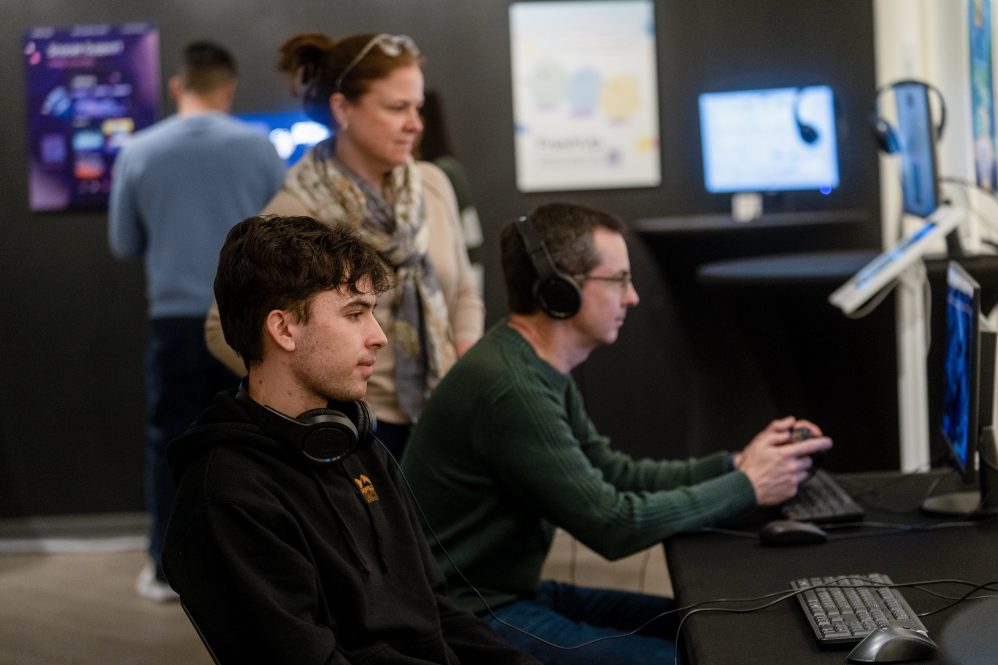
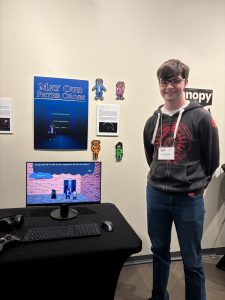
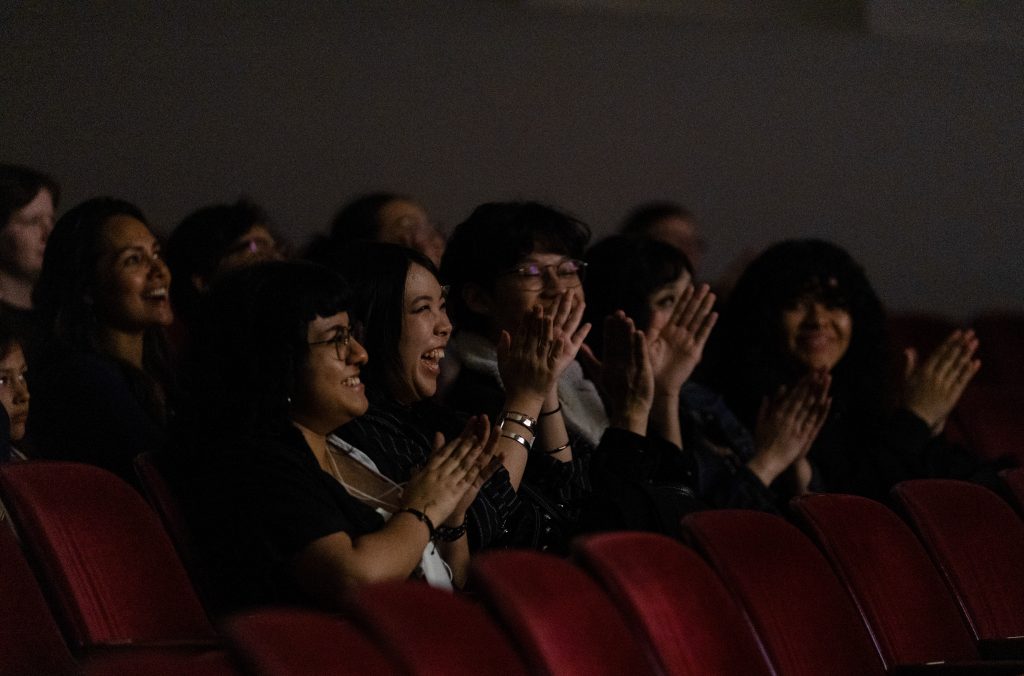
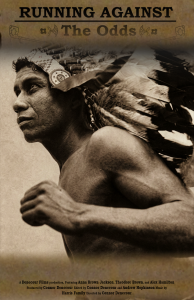


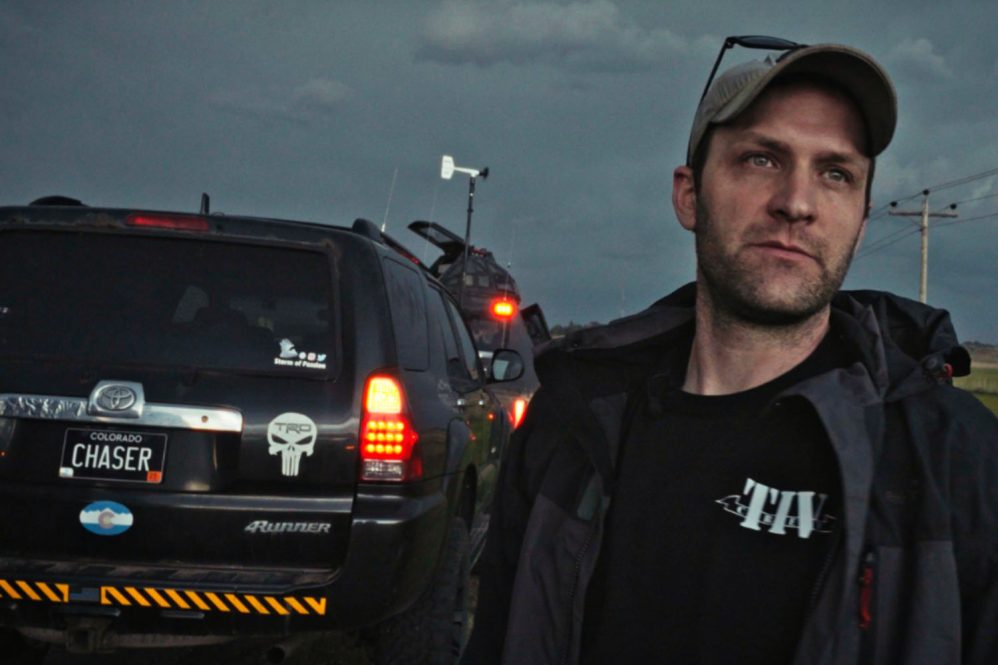


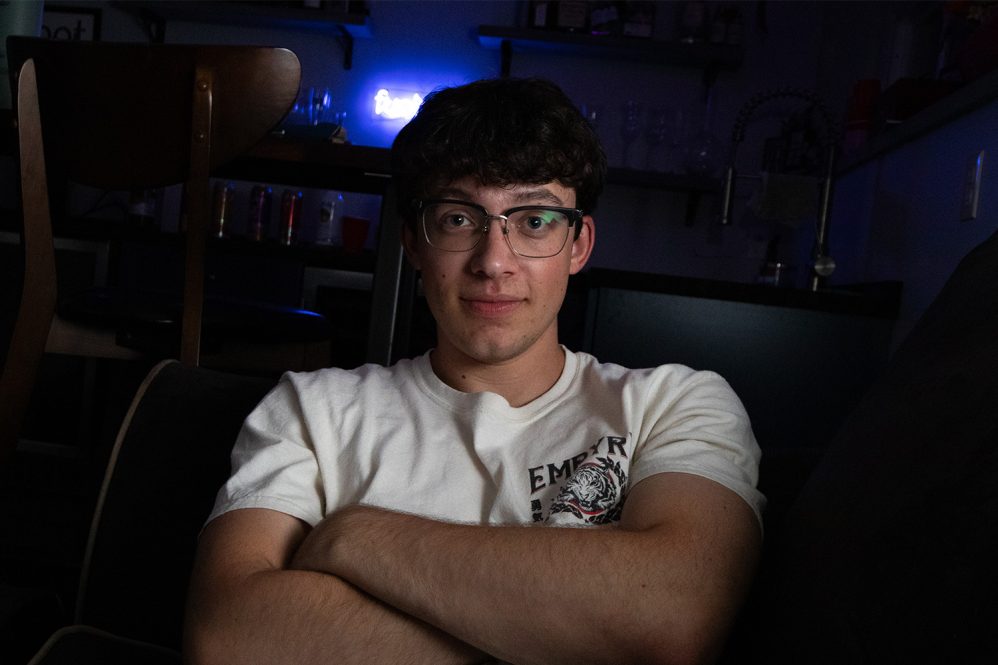
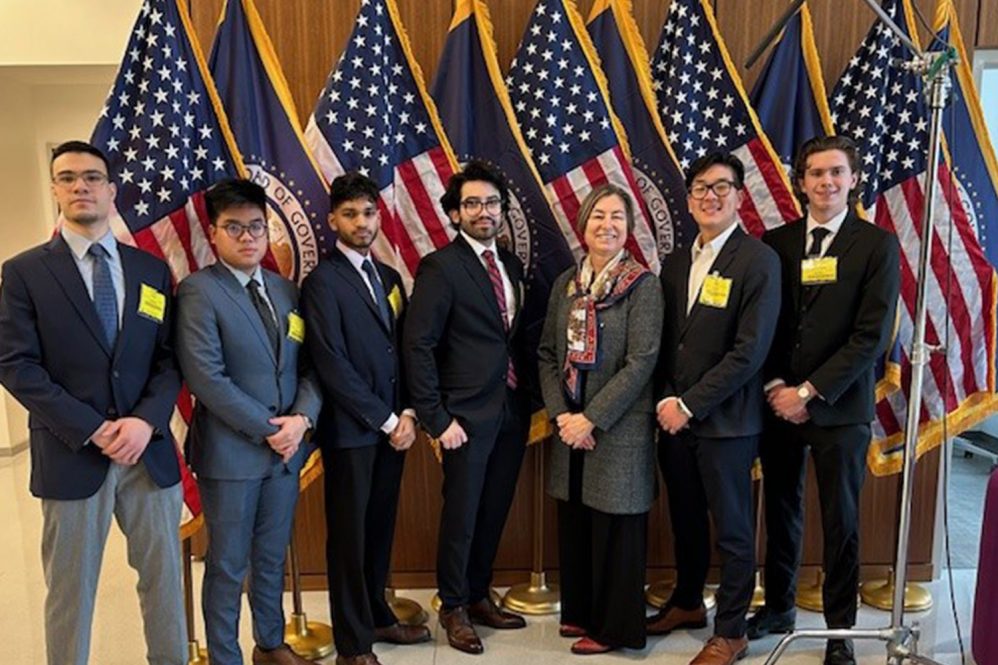

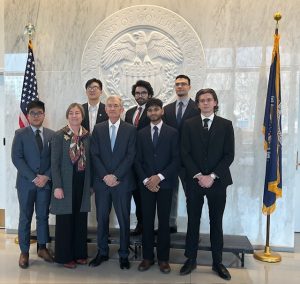

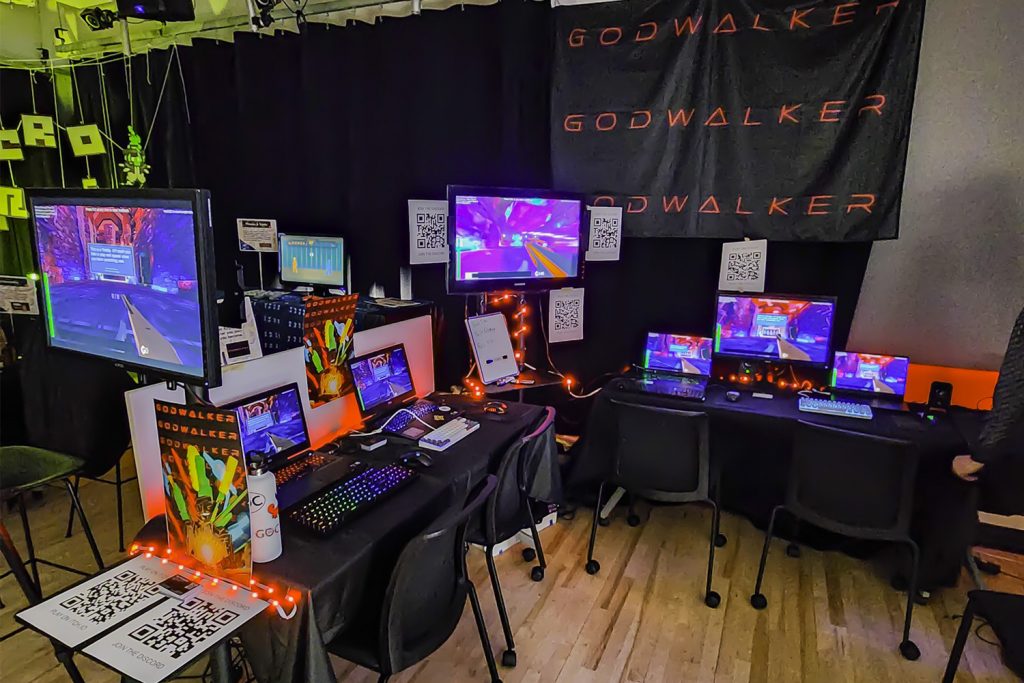
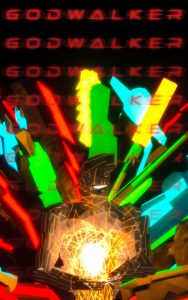
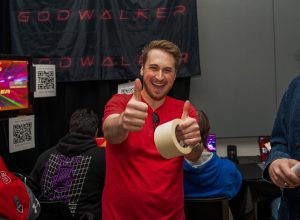
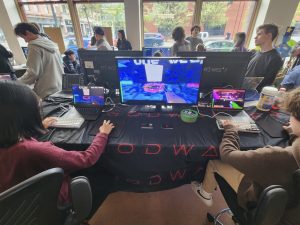
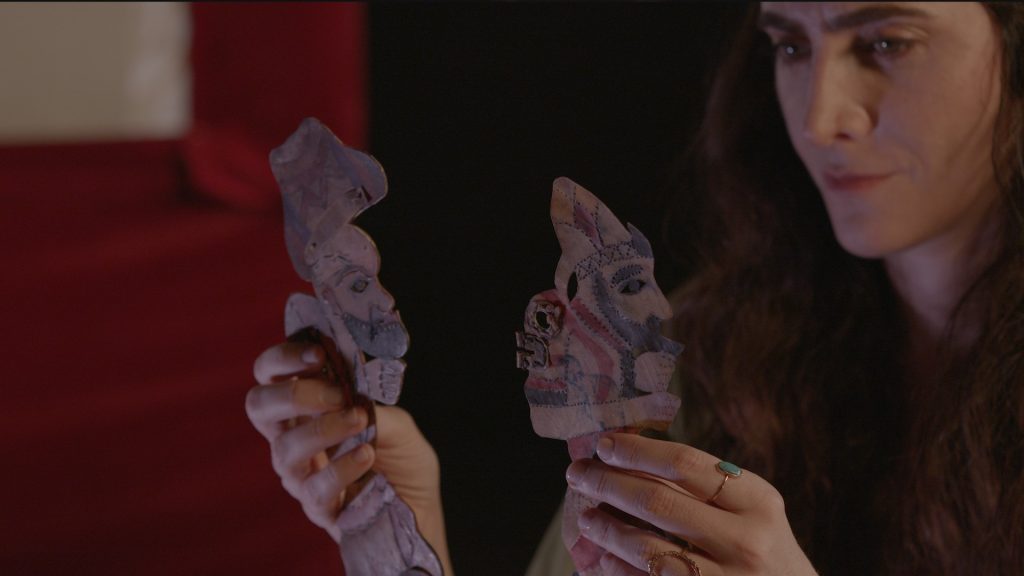
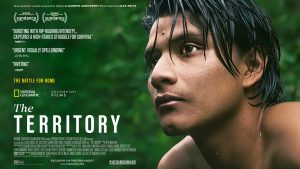

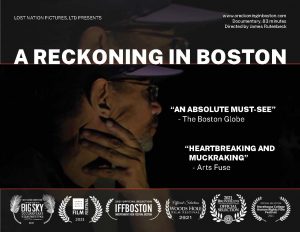
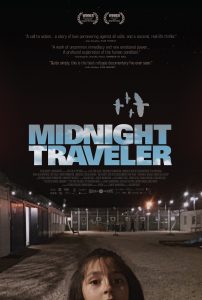

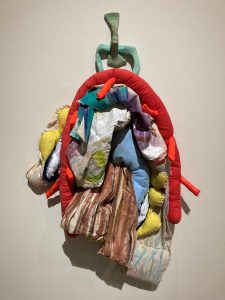
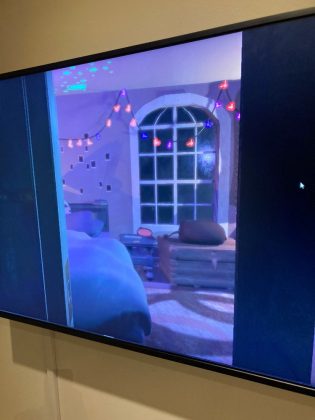
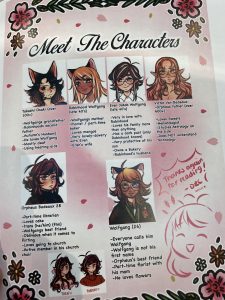
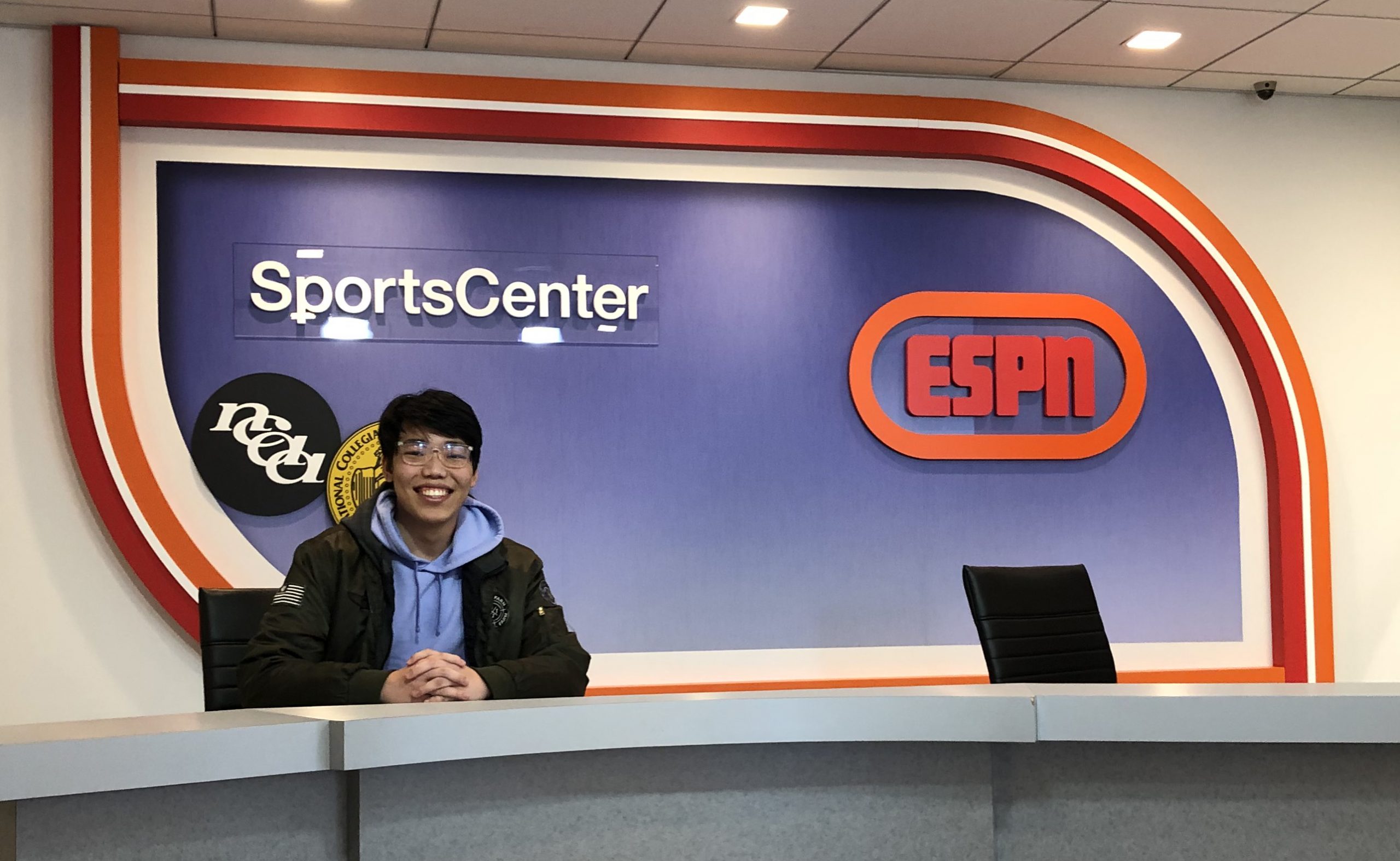

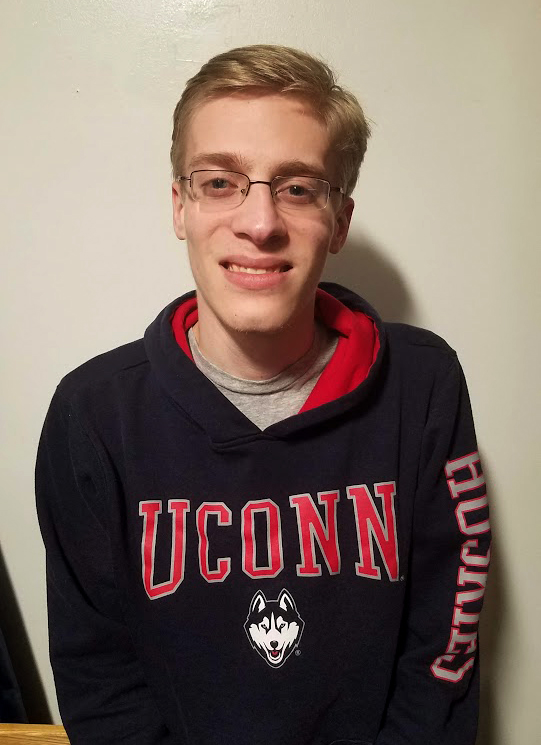 Jon Larsen, from Stratford, CT, was awarded an “Outstanding Achievement in Game Design” for his video game,